
Centuries of history. During recent excavations in our garden (Ca’ Zen garden) some evidences have emerged, testifying a more ancient palazzo on the site and giving further peculiarities. The Venice Superintendence of Archaeology has demonstrated that along with walls and pavements from different Medieval periods (see picture below), there also were even more ancient evidences, such as a sesquipedalian brick from the 2nd – 4th century, that is a clay brick used in the cities of the Roman Empire, probably coming from Altinum, the ancient precursor to Venice, later used during the foundation of the City of Water.

Our water wellhead. This elegant vera da pozzo from over 500 years ago stands like an iceberg, testifying the ancient structure of the well set in the garden of the palazzo. The wellhead develops underground through two traps for the collection of rainwater, with related sand and carbon filters, and a cistern from where water is drawn directly from the wellhead.


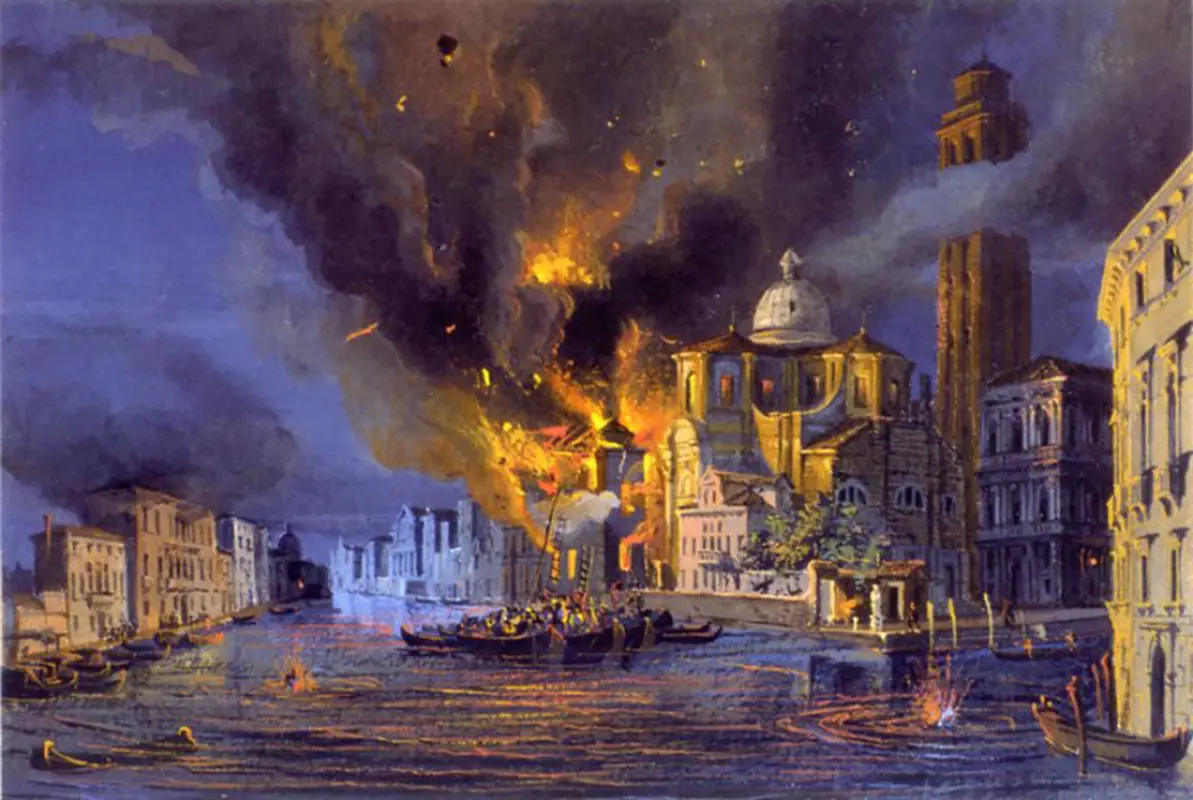
A fire on the City of Water. Our B&B is located at the upper floors of Palazzo Zen (Ca’ Zen), which was reconstructed almost two centuries ago on the same site where the original and ancient Palazzo Zen was set. The original palazzo was burnt in 1849 during the siege of Austrian artillery.

A Venetian – African record. At the entrance of our B&B there is an old aircraft propeller. Grandfather Fabio (on the picture below, the man on the right), born in 1920 and living in the principal floor of the building, used to fly for business to South Africa during the ’40s and ’50s. With his aircraft built in 1939, he made the world record of air navigation during a flight from the far Johannesburg to his beloved city of Venice. He has repeated his record for three times and is still undefeated. His small aircraft had fabric coverings, a wooden propeller, no radio and had 4,5 hours autonomous flights. Grandfather Fabio crossed Africa with more than twenty stops, flying on areas still not mapped, classified with the phrase ‘hic sunt leones’, mainly indicating cannibalism areas. In 1954 he arrived in Venice after crossing the Mediterranean Sea in one flight; he come back during summer because, as he later explained, ‘on the Southern hemisphere, it is recommended to fly on forests and savannas during winter, because the grass is dry and areas for emergency landing are quicker to identify’. This and other measures saved his life from the difficulties he faced during his famous long-haul flight.

